
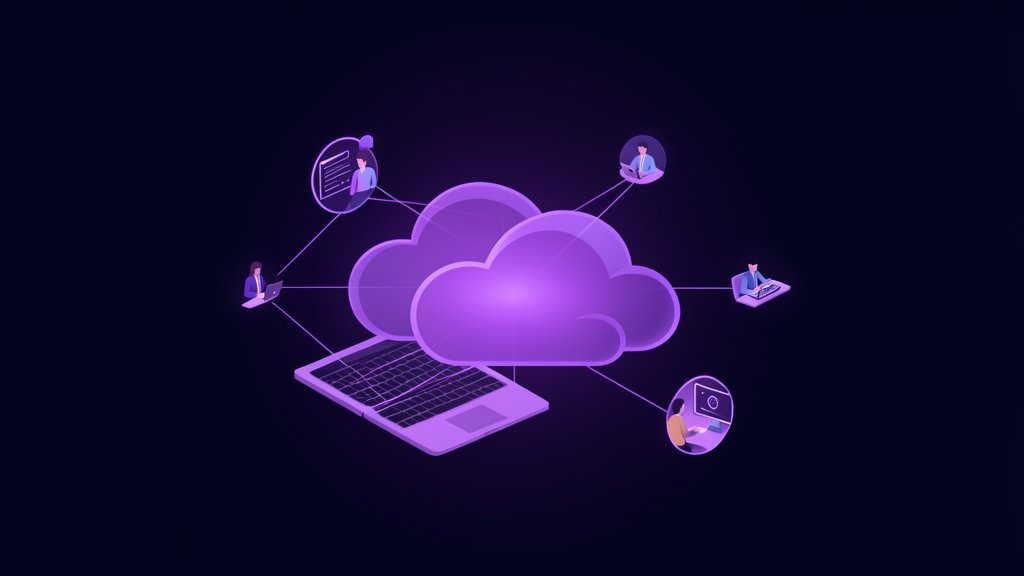
The Coffee Shop Office: Why Your Office Is Just a Glorified Coffee Shop
Your office is a coffee shop. Better chairs, worse coffee, and a printer someone actually knows how to use. But functionally, it is a place where people sit and connect to the internet. Everything else, the applications, the data, the collaboration, lives somewhere else.
Most businesses have not caught up to this reality. They are still running their networks as if the office is the centre of the universe. MPLS connecting sites. Servers in cupboards. VPNs to get back into the office from home. Security designed around the perimeter of a building that people only visit three days a week.
The path from MPLS to coffee shop
The progression goes like this. First, MPLS. Private circuits connecting your sites because that was the only way to get reliable access to centralised applications. Expensive, inflexible, and tied to a specific physical topology.
Then SD-WAN. Internet links replacing MPLS, with smart routing and failover. Better, cheaper, more resilient. But still fundamentally about connecting sites to each other, as if the site is what matters.
The end state is simpler
When your applications live on the internet, you do not need to connect sites to each other. You need each site to have internet. That is a different problem, and a much simpler one. Every site gets a good internet connection with LTE failover. Users connect to SaaS applications directly. Internal applications are hosted in the cloud with proper authentication. The site is just a location, not a network node.
Security follows the same logic. If applications live on the internet, your perimeter is not a firewall at the office. It is the endpoint. Each device has its own security: endpoint protection, conditional access, device compliance checks. WiFi in the office runs client isolation so devices cannot see each other. If someone brings in a compromised laptop, it cannot pivot to other devices on the same WiFi. It can only reach the internet, where your cloud security controls apply.
What changes when you stop needing SD-WAN
SD-WAN exists to solve the problem of routing traffic between sites. When applications move to SaaS and internal apps are internet-accessible, there is no inter-site traffic to route. Each site connects to the internet independently. The SD-WAN appliance becomes a simple router with failover, which is a much cheaper and simpler piece of equipment.
The business capabilities that used to live on site now live either with SaaS providers (Microsoft 365, Salesforce, cloud ERP) or on in-house infrastructure that is exposed to the internet with proper authentication. Either way, the user experience is the same whether they are at the office, at home, or at an actual coffee shop.
Why most businesses are not there yet
The reason is usually legacy applications. Some business-critical system that only works on the internal network, was written 10 years ago, and nobody wants to touch it because it works. Rewriting or replacing it for internet access feels like risk. The irony is that keeping it on a private network with VPN access is a bigger risk, because VPNs are a primary attack vector and the application itself probably has unpatched vulnerabilities that the private network has been masking.
The migration takes time. Nobody expects a business to rewrite all its applications overnight. But the direction should be clear. Every new application should be internet-accessible by design. Every legacy application should have a plan for replacement or migration. The destination is simpler, cheaper, and more secure than the current state. It just takes the decision to move toward it.
Where we fit
We help businesses move along this path. That might mean SD-WAN as a transition from MPLS. It might mean cloud migration for legacy applications. It might mean endpoint security redesign for a workforce that no longer needs a VPN. The starting point is different for every business, but the destination is the same: your office is a coffee shop, your security is at the endpoint, and your applications live on the internet.
If that is where you want to go, contact us. We will tell you what it takes to get there from where you are.
What holds businesses back
The main reason businesses stay on MPLS or SD-WAN is not technical. It is familiarity. The network team knows how MPLS works. The firewall rules are written for site-to-site connectivity. The applications are deployed on servers inside the network. Moving to pure internet means rethinking all of that, and the work of rethinking feels bigger than the work of staying put.
But every year that passes, the gap between businesses running on legacy connectivity and businesses running on internet-native architecture gets wider. The internet-native businesses add tools faster, scale without network projects, and onboard new sites in days. The legacy businesses are still scheduling maintenance windows and racking firewalls.
The transition does not happen overnight. It happens in stages, and each stage delivers value. Moving from MPLS to SD-WAN is stage one. Moving from SD-WAN to internet-native is stage two. We help businesses plan both, and we help them understand when the next stage makes sense.
Want to know what attackers can see about your business? We run a free attack-surface scan for South African companies. It’s passive, so nothing gets touched. You get a plain English report in your inbox. Start here: free security scan
Need Help With Your Security or IT?
We work with South African businesses to assess, deploy, and manage security and IT that actually fits. No jargon, no scare tactics. Practical advice and real support.
Contact Us →